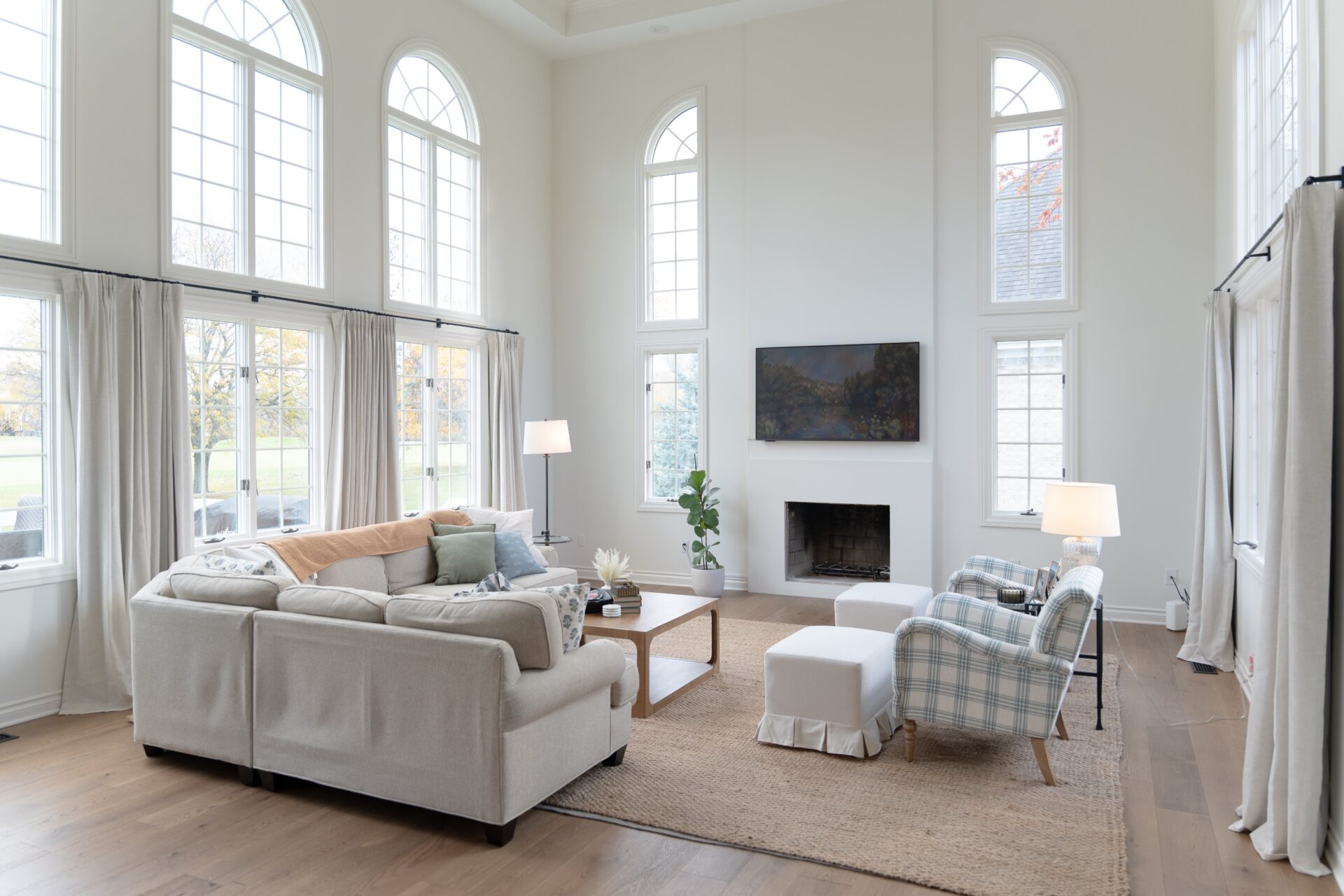

When people ask about painting cost per room, the honest answer is that it depends. The single biggest factor is labor. Paint itself is fairly consistent, but the time it takes to finish a room varies based on layout and condition. We know that can feel a little vague, but every room is unique, and the details really matter.
For example, basements often have a ledge halfway up the wall. That ledge means painters must cut in and tape off the top and bottom sections. It uses the same amount of paint, but it doubles the work because it is essentially like painting two walls instead of one. That extra time is what drives cost up, and it’s those little details that make us appreciate the skill involved in a professional paint job.
What Impacts Painting Cost Per Room?
Several practical details come into play when figuring out painting cost per room. Things like the room’s layout, the scope of work, the condition of the surfaces, and even how accessible the space is can all raise or lower the final price. Thinking through these factors can also help you plan your project and avoid surprises along the way.
Several factors can raise or lower the final price:
- Furniture and accessibility – Empty, easy-to-access rooms are quicker and more affordable to paint.
- Room layout and size – Larger rooms or tricky features (like ledges or angles) add extra time.
- Scope of work – Painting ceilings, trim, or doors increases labor and materials.
- Condition of the room – Patching, sanding, priming, or repairs raise the cost.
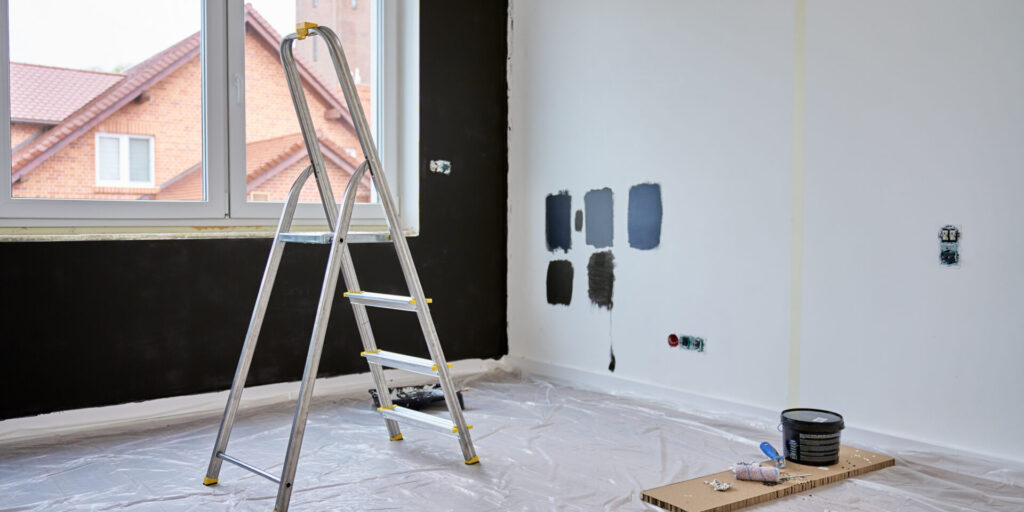
Why Professional Painting Is Not $300 Per Room Anymore
Years ago you might have found a painter to do a bedroom for $300. Today, reputable companies that pay living wages, employ staff instead of subcontractors, and use high quality paints cannot realistically offer that price. Back then, it was easy to overlook all the work involved, but a proper job includes careful prep and skilled application. That’s why the price has increased over time.
If you want to learn more about selecting the right paint for your home, check out this helpful Interior Paint Buying Guide from Home Depot.
What To Expect For A Standard Bedroom
In a standard bedroom—say 12 by 12 or 12 by 14 feet—painting the walls the right way means going through these steps:
- Move furniture and switch plates
- Cover and protect everything
- Patch holes and repair walls as necessary
- Sand the walls
- Spot prime any repairs or stains
- Tape or mask off any necessary items like base trim and ledges (and sometimes casings)
- Apply two coats of paint
- Put everything back into place
That full process typically takes seven to nine hours. For an average bedroom or den, walls-only jobs start around $550. The price goes up if you add trim, doors, ceilings, extra coats, repairs, retexturing, or water stain treatment. We like to walk homeowners through these steps so there are no surprises, and everyone feels confident in what the final result will look like.
The Bottom Line On Painting Cost Per Room
There is no one flat rate for painting cost per room. Size, layout, condition, and scope determine the final price. As a practical starting point, walls only in an average bedroom begin at about $550, and costs go up as additional surfaces and repairs are added.
Ready To Refresh Your Space?
If you’re thinking about repainting a room in your West Michigan home, we combine local expertise, attention to detail, and fair pricing to make the process simple.
Here’s how it works:
- Schedule a consultation with our team.
- Walk through your space together so we can see the layout, condition, and details.
- Get a clear, straightforward quote so you know exactly what to expect.
Give us a call to schedule a consultation! We will walk through the room with you, explain what impacts the price, and give you a straightforward estimate. Contact us here.